Photographing and organising evidence when moving in
Create a clear room-by-room record, keep original photographs and connect each issue to a dated note and the inventory.
In this article
Make a record you can understand later
Moving day is busy. A small, organised record is easier to use than hundreds of unnamed images scattered across several phones. This is a practical organisation method for renters across the UK, not a promise about the outcome of a deposit dispute. Applicable procedures depend on the nation, tenancy and deposit scheme.
Start with a room list. For each room, take an overview, then closer photographs of the condition you want to record. Keep enough surrounding detail to show where a mark, crack or damaged fitting is located. Photograph clean and undamaged areas too; an evidence folder should describe the starting condition rather than only its worst features.
Keep originals and explanatory notes
Keep the original files. If you crop or annotate an image for explanation, save the edited copy separately. Avoid filters that change the appearance of surfaces. A date in a filename or camera metadata is helpful for organisation, but do not assume it proves when an image was taken.
Write a short note for each issue: room, location, what you observed and when you recorded it. Separate observations from assumptions about a cause. “Brown mark beside the window” is a more useful observation than an unverified diagnosis.
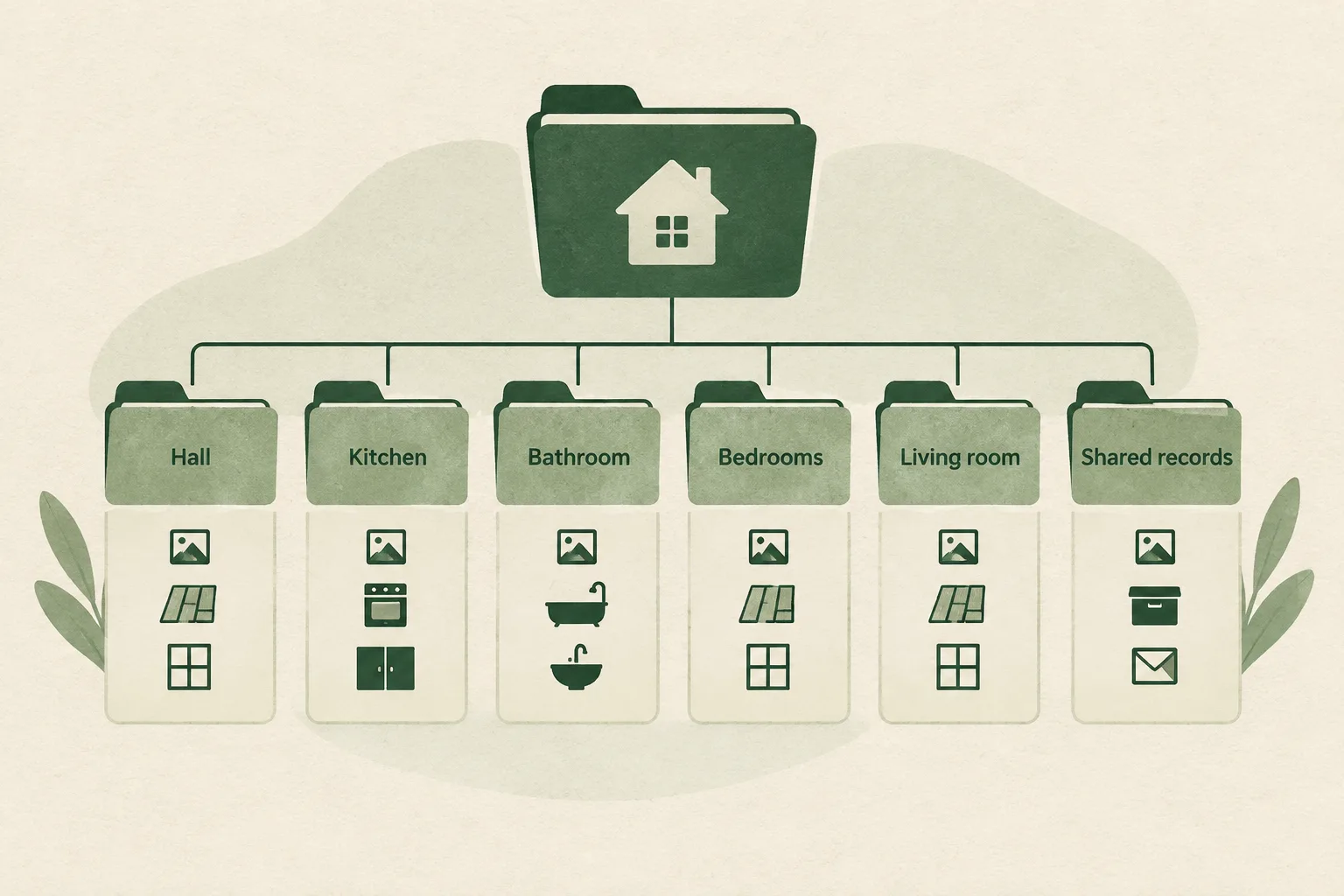
A simple folder structure might look like this:
- Hall: overview, flooring, doors and any existing marks.
- Kitchen: worktops, appliances, cupboards and visible condition.
- Bathroom: fittings, seals, surfaces and visible condition.
- Bedrooms and living room: walls, floors, furniture and windows.
- Shared records: inventory, meter readings and correspondence.
Compare with the inventory
Read the inventory or check-in record beside your notes. List omissions and disagreements specifically, using the relevant room and item. Check the process and deadlines set out in your documents and seek current advice if you are unsure; this article does not give one universal UK deadline.
Send questions or corrections through an appropriate written channel and keep the message and any response. A folder of photographs does not itself notify the landlord or agent. If something needs urgent attention, report it promptly through the relevant repair process as well.
Protect the people in the photographs
Avoid including faces, identification documents, bank information or another person's belongings unnecessarily. Store the record privately and share it only with people who need it for the tenancy. Keep a backup you can still access if a phone is lost or a housemate moves out.
Make the record useful at move-out
Use consistent room names so you can later compare the same locations. Add new records when repairs or agreed changes happen, keeping the original move-in record intact. Keep written approvals and work records alongside the relevant photographs.
Our moving-in checklist covers the broader first-day tasks. The moving-out checklist helps you plan the return visit to these records. We Want To Rent's private home records can keep the photographs, documents and dated notes together for your household.