Comparing London rental costs including bills and commuting
Compare a whole monthly budget, separate moving costs from recurring costs, and test the journeys you would actually make.
In this article
Compare the same household and month
A lower advertised rent is a starting point for a comparison. It is not a complete monthly budget. Put two prospective homes side by side using the same household size, travel pattern and assumptions about bills.
Use this as a planning worksheet, not a statement of current London prices. The numbers below are invented to demonstrate the calculation; replace every figure with a quote, a checked bill or a clearly marked estimate.
| Monthly household cost | Example A | Example B |
|---|---|---|
| Rent | £2,000 | £1,850 |
| Bills estimate | £350 | £390 |
| Household commuting estimate | £180 | £300 |
| Total | £2,530 | £2,540 |
In this illustrative comparison, a £150 rent saving becomes a £10 higher total. Different households will get different results. Do not divide the total equally until everyone has agreed which costs are shared and which are personal.
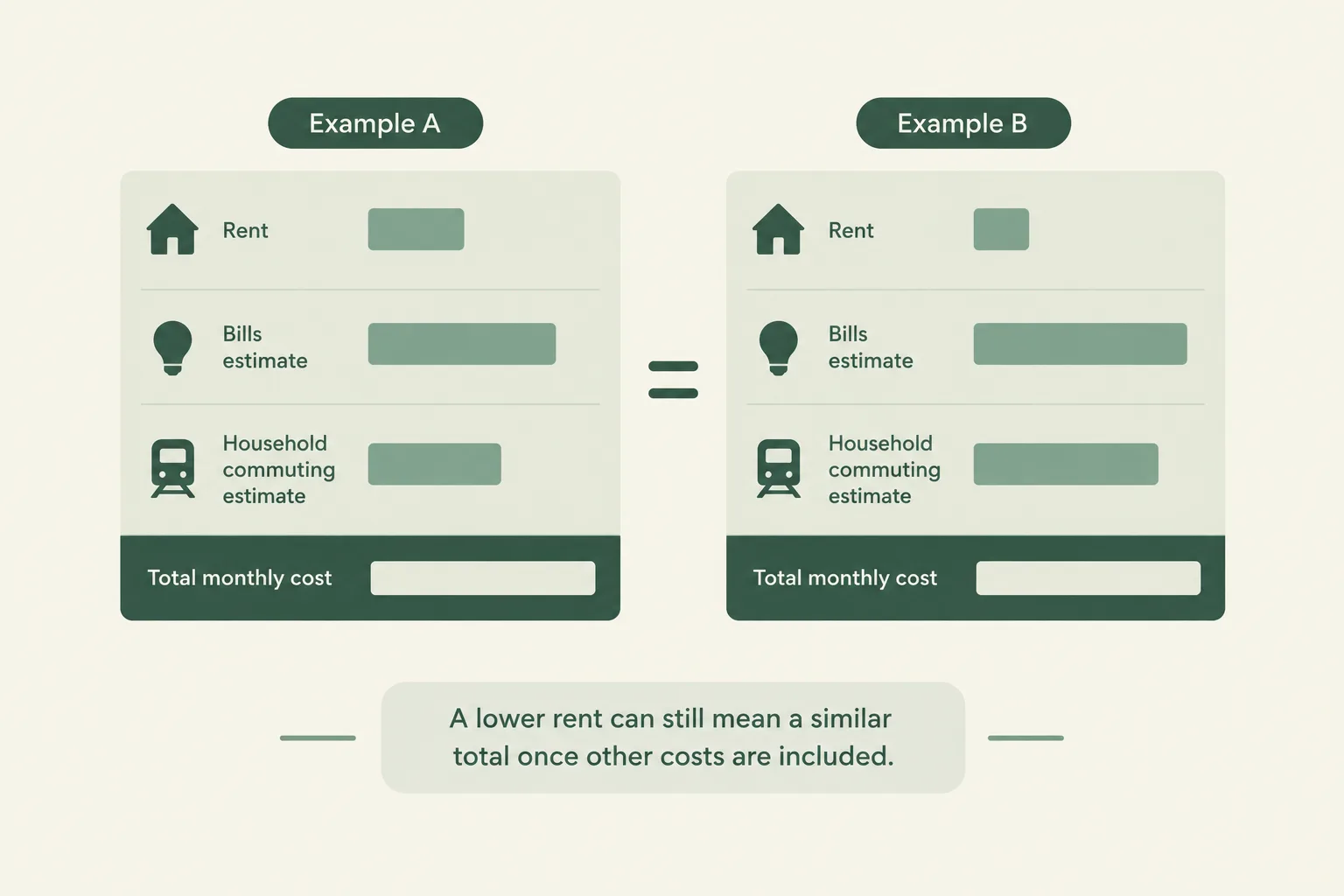 Lower rent can still mean a similar total once other costs are included. · AI-generated illustration
Replace estimates with useful evidence
For each bill, record who supplied the figure, what period it covers and what is included. Check council tax against the relevant council's current information for the actual property and household circumstances. Ask who pays for water, energy, broadband and any other quoted charges. A previous occupant's consumption is context, not a promise about your own bill.
For energy, use current supplier quotes and Ofgem's consumer information. Do not copy a national headline figure into a household budget without checking what usage and tariff it assumes. Leave unknown costs visibly marked as unknown.
Price the journeys you will make
Use TfL's current fares information and the relevant operator for journeys outside its coverage. Compare your actual travel days, stations, routes and times. A hybrid worker and a daily commuter may prefer different ticket choices.
Test the walk to the station and the final leg to work or study. Record journey time separately from cash cost: a cheaper route can still be a poor fit for the household. Check alternatives for late evenings and disruption rather than assuming the shortest advertised journey always applies.
Keep moving money separate
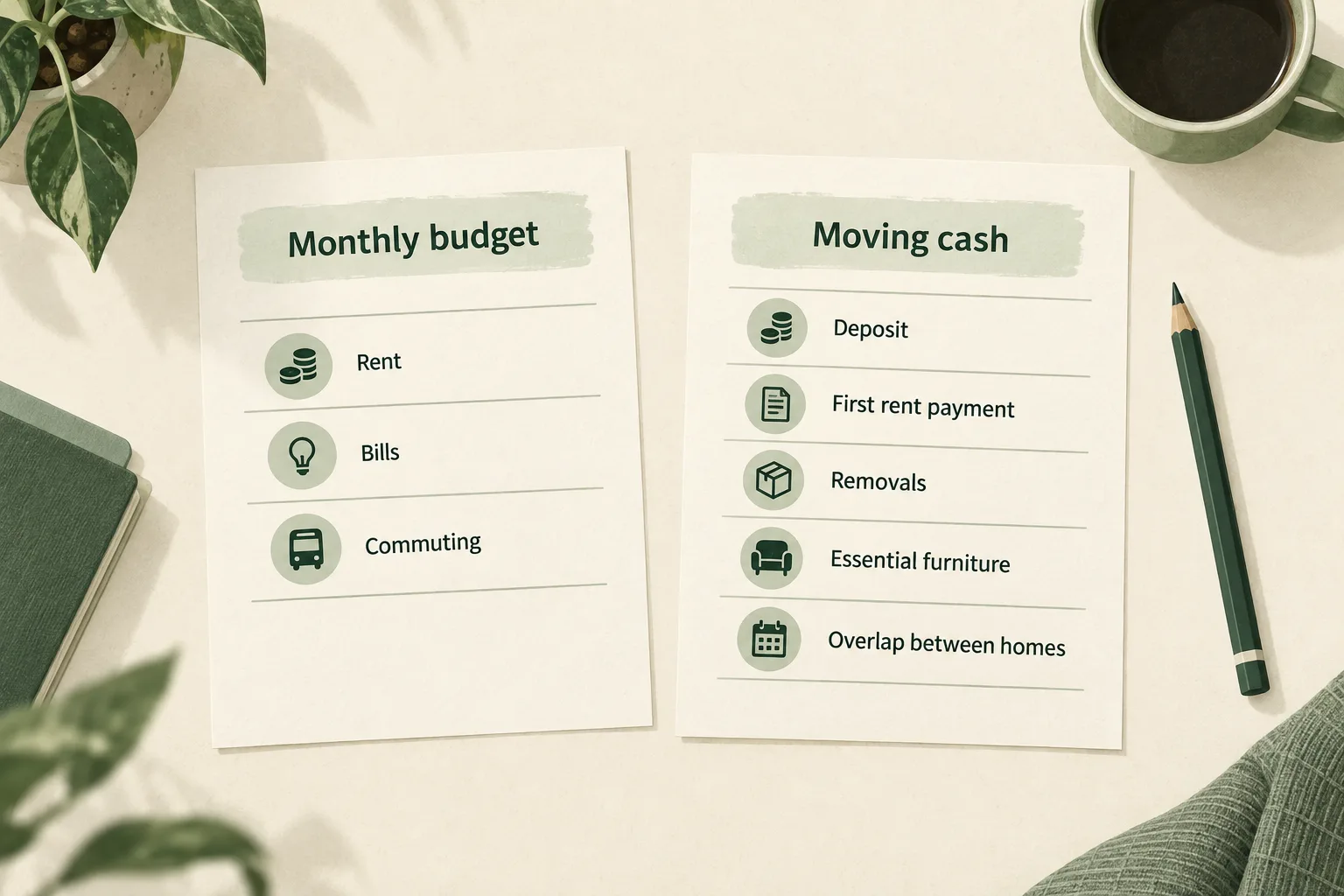
Create a second list for deposits, the first rent payment, removals, essential furniture and any overlap between homes. These are cash-flow requirements, not automatically recurring monthly expenses. Confirm the permitted payments and deposit rules for your particular tenancy using current England guidance before making a payment.
Test a less comfortable month
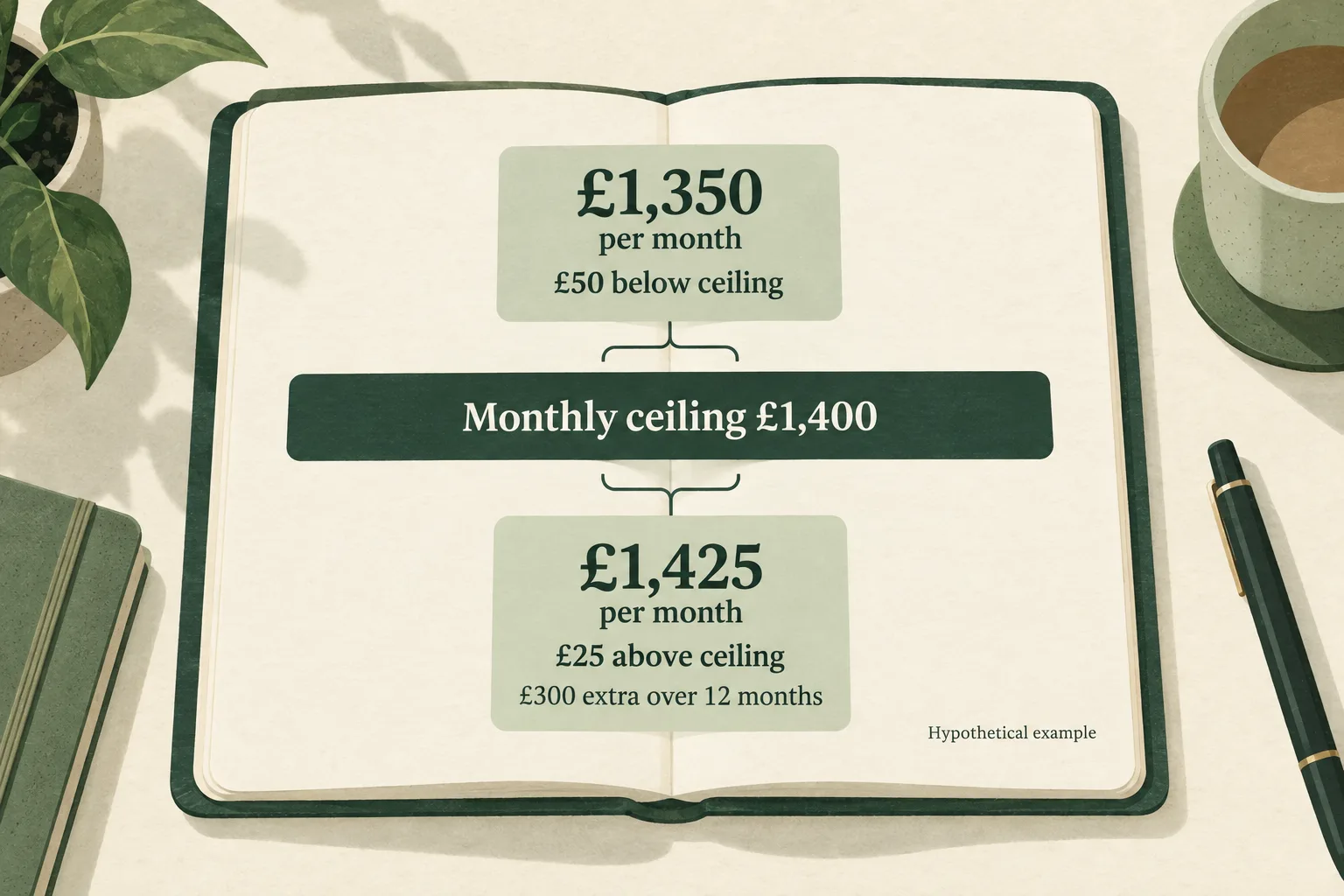
Ask what happens if a bill is higher than expected or commuting increases. Use your own cautious estimate rather than treating the most optimistic total as a guarantee. Agree a limit that leaves room for food, other commitments and a buffer you choose.
Explore our postcode guides for area context, then use the viewing checklist to check the property itself. Area averages cannot establish what one particular home will cost you.